

Comparison Guide
SAP MDG vs. DQC: What are key differences?
Your evaluation guide to navigate data quality
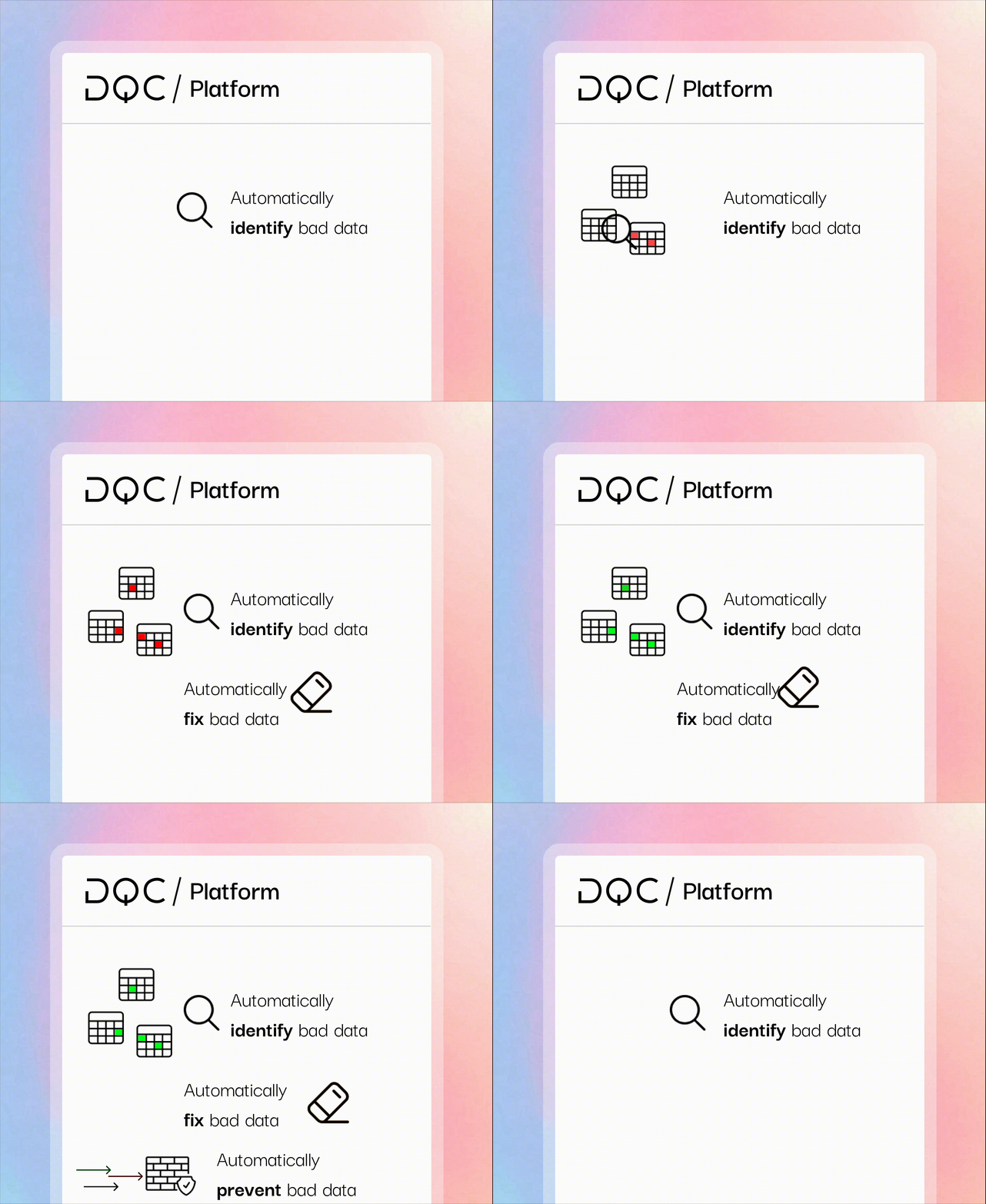
DQC vs. SAP MDG summary:
Ecosystem independence: DQC operates effectively regardless of your enterprise systems, while SAP MDQ is designed primarily for SAP environments
Faster time-to-value: DQC implementation takes days rather than months typical of SAP deployments
Business user empowerment: Our solution is designed for data stewards and business users, not just technical SAP specialists
Flexible data models: DQC adapts to your data rather than requiring conformity to rigid predefined structures like SAP
A more detailed review of SAP MDG and DQC Platform highlights several key differentiators:
SAP MDG:
Designed specifically for SAP environments with limited cross-system capabilities
Focuses on centralized governance within the SAP ecosystem
Requires extensive SAP expertise and technical configuration
Emphasizes structured workflows and approvals
High implementation and maintenance costs
Limited automated quality enhancement capabilities
Primarily IT-driven with complex interfaces for business users
DQC Platform:
System-agnostic solution that works across SAP and non-SAP environments
AI-powered rule generation that requires minimal manual setup
No-code interfaces designed for business users, not just IT specialists
Agentic workflows that actively improve data quality with machine learning
Rapid implementation with faster time-to-value
Identifies business process impacts of data quality issues
Provides intelligent remediation suggestions beyond simple validation
Practical Examples
Supplier management:
- SAP MDG: Enforces consistent supplier naming conventions and mandatory fields
- DQC Platform: Automatically detects misaligned payment terms between SAP and procurement systems, suggests corrections based on supplier history, and flags potential compliance issuesProduct Information:
- SAP MDG: Maintains centralized product hierarchy and basic attributes
- DQC Platform: Validates that product descriptions meet industry standards (ETIM/BMEcat), identifies missing critical attributes for sales channels, and suggests improvements from similar productsFinancial master data:
- SAP MDG: Provides approval workflows for cost center creation and changes
- DQC Platform: Identifies inconsistencies between GL accounts, cost centers, and business partners that would cause transaction processing issues, and proactively alerts relevant stakeholders
Implementation Comparison
SAP MDG Approach: "Implementation requires 12-18 months with specialized SAP consultants, custom development for non-standard requirements, and extensive training for users to navigate complex interfaces."
DQC Platform approach: "Implementation takes days, max. weeks not months, with out-of-the-box connectors to SAP and other systems. Business users can create and manage rules without IT dependency, seeing value within days of deployment."
Integration with SAP Landscape
SAP MDG:
Native integration with SAP S/4HANA and SAP ECC, albeit limited ability to enforce quality outside the SAP ecosystem. Requires SAP-specific expertise to maintain and evolveDQC Platform:
Complements SAP investments by extending quality controls beyond SAP boundaries, connecting SAP data with other enterprise systems to ensure end-to-end process integrity. Provides business-friendly interfaces that don't require SAP technical knowledge
Identifies cross-system data issues that SAP MDG cannot detect
Business Value
SAP MDG "etablishes governance processes and data ownership within the SAP landscape."
DQC Platform"delivers quantifiable business improvements by preventing costly errors, accelerating processes, improving compliance, and enabling data-driven decisions across all enterprise systems—not just SAP."